The Commonwealth

Wednesday, 13 October 2010

The Commonwealth of Nations,, is an intergovernmental organization of fifty-five independent member states. The Commonwealth was first officially formed in 1931.
The member states co-operate within a framework of common values and goals as outlined in the Singapore Declaration.
These include the promotion of democracy, human rights, good governance, the rule of law, individual liberty, egalitarianism, free trade, multilateralism and world peace.

The symbol of their free association is the Head of the Commonwealth, which is a ceremonial position currently held by Queen Elizabeth II.
Some members; United Kingdom, Canada, Australia, New Zealand, South Africa, Jamaica...
These countries have in common are all former colonies of the British Empire.
I hope you all enjoy!


Hugo Queiros
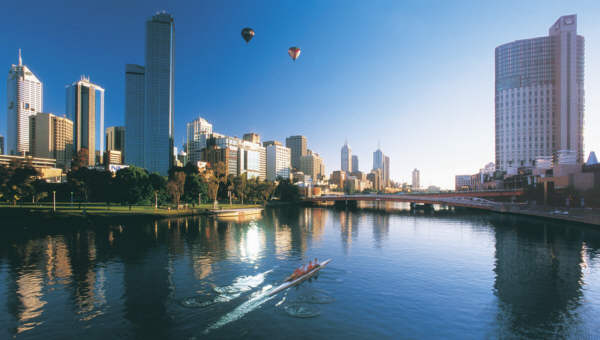
Australia....

Australia ,officially the Commonwealth of Australia, is a country in the Southern Hemisphere comprising the mainland of the Australian continent, the island of Tasmania and numerous smaller islands in the Indian and Pacific Oceans.


On 1 January 1901, the six colonies became a federation and the Commonwealth of Australia. Australia ranks highly in many international comparisons of national performance such as human development, quality of life, health care, life expectancy, public education, economic freedom and the protection of civil liberties and political rights.


Australia continued to recognize the monarch of United Kingdom as head of state. Because of the continent's great age, extremely variable weather patterns, and long-term geographic isolation, much of Australia's biota is unique and diverse. About 85% of flowering plants, 84% of mammals, more than 45% of birds, and 89% of in-shore, temperate-zone fish are endemic. Australia has the greatest number of reptiles of any country, with 755 species.


Hugo Queiros

All Blacks

Sport has a major role in New Zealand's culture, with the unofficial national sport of rugby union being particularly influential.
Rugby union, commonly referred to as rugby, is closely linked to the country's national identity. The All Blacks represent New Zealand in rugby union, which is regarded as the country's national sport. They won the inaugural Rugby World Cup, are the leading points scorers of all time and the only international rugby team with a winning record against every test nation they have ever played. They have the highest win ratio of 75 percent and rank as the number one team in the world for the most period of time in IRB World Rankings. Only 5 of the top 20 ranked rugby union test nations have ever beaten New Zealand in over 100 years of international competition. 
The All Blacks perform a haka (Māori challenge) before each international match. The haka has been closely associated with New Zealand rugby ever since a tour of New South Wales in 1884. The New Zealand native team that toured Britain in 1889/89 used Ake Ake Kia Kaha and the 1903 team in Australia used a mocking haka, Tupoto koe, Kangaru!. The 1905 All Blacks began the tradition of using Ka Mate and by 1914 this was firmly established as part of New Zealand rugby. The 1924 All Blacks used a specially composed haka Kia Whaka-ngawari, but later All Blacks reverted back to Ka Mate.


Miguel Amaral

New Zealand


New Zealand is an island country in the south-western Pacific Ocean. It is composed by two main Islands (the North Island and the South Island), and numerous smaller islands, most notably Steward Island/Rakiura and the Chatam Islands. The indigenous Māori language1 name for New Zealand is Aotearoa , commonly translated as land of the long white cloud. The Realm of New Zealand also includes the Cook Islands and Niue (self-governing but in free association); Tokelau; and the Ross Dependency (New Zealand's territorial claim in Antarctida). New Zealand’s capital city is Wellington and it is located south of North Island.
New Zealand is notable for its geographic isolation: it is situated about 2,000 kilometres (1,200 miles) southeast of Australia across the Tasman Sea. During its long isolation New Zealand developed a distinctive fauna dominated by birds, a number of which became extinct after the arrival of humans and the mammals they introduced.
The majority of New Zealand's population is of European descendent; the indigenous Māori are the largest minority. Asians and non-Māori Polynesians are also significant minority groups, especially in urban areas.
The most commonly spoken language is English but they also speak Māori.
New Zealand is a developed country that ranks highly in international comparisons on many topics, including education,  economic freedom and lack of corruption. Its cities also consistently rank among the world's most liveable.
Elizabeth II, as the Queen of New Zealand, is the country's head of state.

1 Māori or te reo Māori is the language of the indigenous population of New Zealand, the Māori, where it has the status of an official language.


Miguel Amaral

Canada


Canada is by most known by it's Red and white flag with the maple leaf on the center. The national anthem is "O Canada", the motto is " From sea to sea", it's capital is Ottawa and the prime minister is Stephen Harper.
Canada is also the second largest country in the world, it has a population of about 34 000 000 and there are six time zones!

Canada is located in the North American continent and it's surrounded by the United States of America (south) and three oceans, the Pacific (west), the Atlantic (east) and the Arctic (north).
Canada has the longest coastline, about one fourth of all fresh water and one tenth of forests of the world.
Mount Logan is the tallest mountain and Mackenzie River is the country's largest River.

The first residents were Aboriginal people but Canada was named by the French explorer Jacques Cartier and the name "Canada" becomes/ comes from the word "kanata" that means Village (in a native language).
Nowadays about 77 per cent of Canadians live in cities and towns, in the southern part of Canada, like Toronto, Montreal and Vancouver that are also the largest cities.

Canadian's main sports are Ice hockey and Lacrosse (as the summer sport).

Canadians invented bowling, basketball and the the useful snowmobile.

        Canada National tower or CN tower in 2006 had the title of world's tallest building with 553 meters.


Miguel Pedro

South Africa

Tuesday, 12 October 2010


The Rainbow Nation

A wide variety of cultures, languages and religious beliefs make up the South Africa’s population, 47 million people.
Eleven official languages are recognized in the constitution. Two of these languages descend from Europe dialects: Afrikaans, which was originated mainly from Dutch, is spoken by the majority of both white and colored South Africans, and South African English which descends from British. Though English has a large role in public and commercial life, it is nevertheless only the fifth most spoken language.
South Africa is ruled by a Constitutional Democracy, which doesn’t mean social development. A quarter of the population is unemployed and lives on less than US $1.25, and two quarters are non official employers. Poverty, racism, illiteracy and lack of health care institutions, are some of the problems that contribute to the human rights decadence.
Nelson Rolihlahla Mandela, the Nobel Peace, was the major fighter against the Apartheid Regime that denies politic, social, and economic rights to the colored Community. Both Color and White Communities had different hospitals, different schools, different restaurants, even different toilets. As a consequence of his aims, Nelson Mandela faced the same cell for over 27 years. In the end he was successful and has created the foundation for the today’s community companionship in South Africa. With the support of several NGOs this balance is being sustained.
They find similarities, they start to accept their one differences, costumes and beliefs. For instance, the most amazing example of mutual cooperation  in South Africa is sport. Transcending race, politics or language groups, sport unites the country, giving them self-confidence, making them believe. 


by: António 12ºA

Jamaica

Jamaica is an island in the Caribbean sea with 234 km from east to west, and 80 km from north to south. Its capital is Kingston.


Jamaica was discovered by Spain (Cristovão Colombo) in 1494. Colombo used it as his family's private property. The British conquered it in 1670.
During the first 200 years of British rule, Jamaica became the largest exporter of sugar, which was achieved through massive use of African slave labour.
In 1838 the slaves made a revolt and slavery was abolished.
The head of state of Jamaica's Queen Isabel II of the United Kingdom.
Jamaica is divided into 14 parishes, which are grouped into 3 counties:
- Cornwall;
- Middlesex;
- Surrey.
Religion is very important in Jamaica but there is one very important religion that has its origins in Jamaica: spiritualism or rastafari.


Diogo